
What Christianity Needs Tomorrow
Reflections from the First-Ever Grimké Men’s Conference

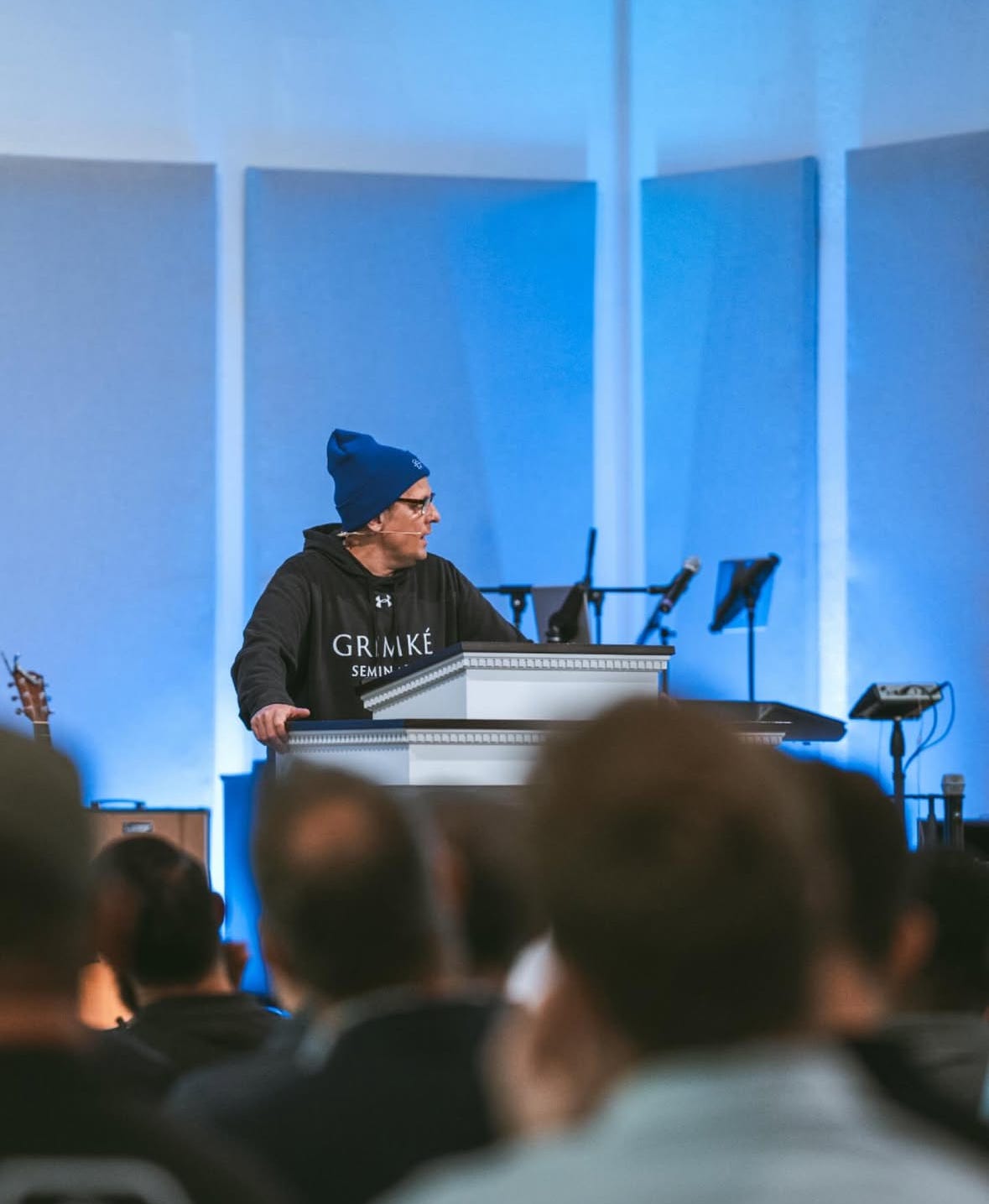
This week, I had the opportunity to attend the very first Grimké Seminary Men’s Conference in Richmond, Virginia and it was unforgettable.
I graduated from Grimké in November of 2024, and to be honest, I’ve deeply missed the brotherhood, the teaching, the worship, and the rich camaraderie that shaped me during my time there. When I saw that they were launching a men’s conference, I didn’t hesitate. I knew I needed to be in the room.
The theme of the conference was Christianity Tomorrow. And it could not have been more timely. The Church is facing real pressure externally from a hostile culture, and internally from theological compromise and soft discipleship. But across nine sessions, we were called to something deeper. Something more faithful. Something historic.
One of the most powerful moments came during worship. Over 250 men sang with passion and power, lifting their voices to the Lord with hearts wide open. There’s nothing quite like it. Every time I come to Richmond, I’m reminded of the kind of worship that stirs the soul and humbles the heart. It’s the kind of worship I long to see regularly in our churches.
Here’s a glimpse of that moment:
https://twitter.com/dougponder/status/1950163784972009810
What follows are my reflections from each session, key ideas, takeaways, and truths I’m still praying through.
Let’s dive in.
Session 1: Bryan Laughlin
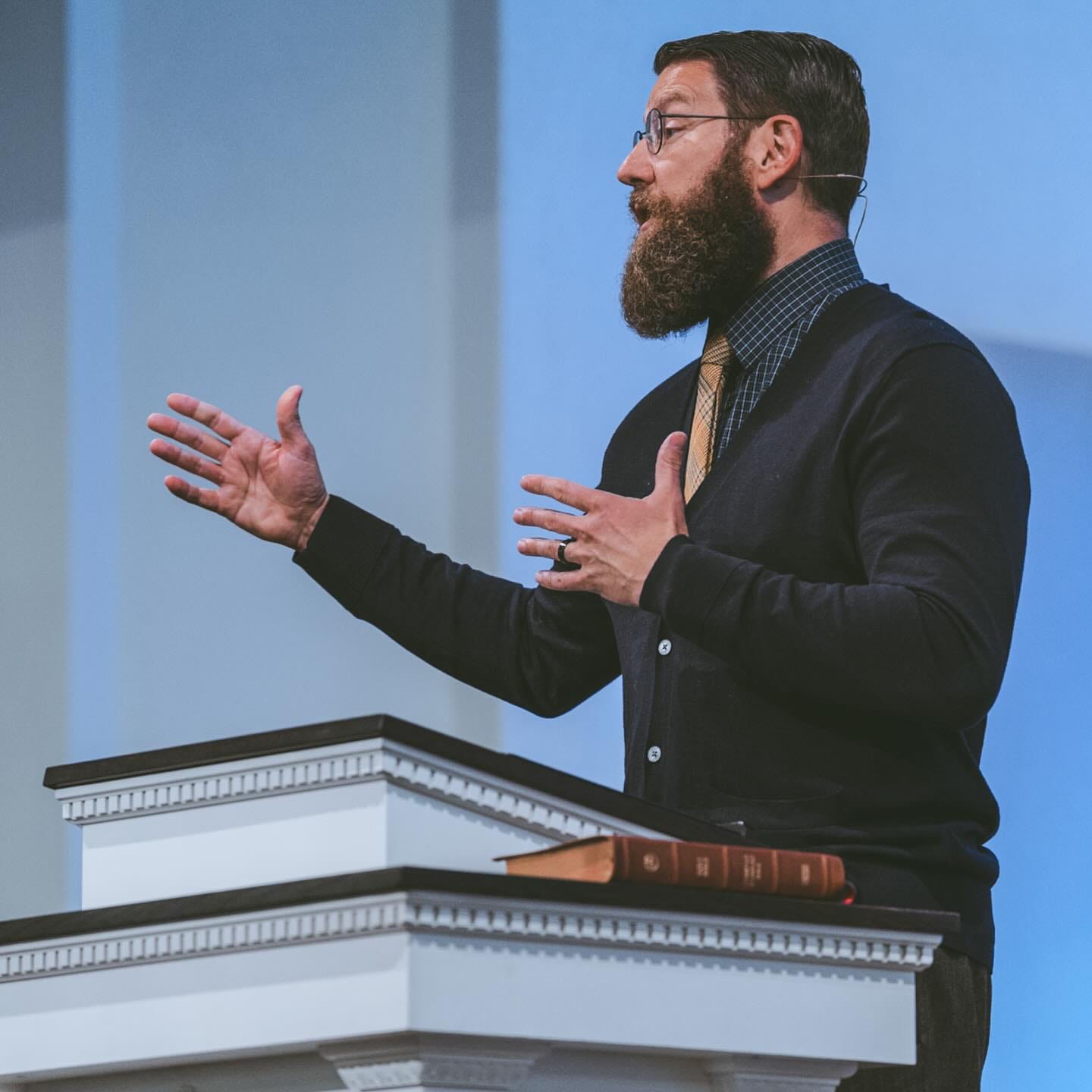
Key text: Acts 4:8–12
Memorable quote: “Christian men must be dogmatic1 men. That is a wonderful word that needs to be redeemed. That means you are unwavering about your convictions.”
This was a direct call to reclaim a Christianity that is rooted in truth, courage, and conviction, especially in a culture that increasingly opposes the gospel. And not just out there in the world, but even within what’s supposed to be the confessing Church in America.
Bryan opened with the recent passing of Pastor John MacArthur, using it as a reminder of what we’re losing: men who refused to compromise, who stood on the Word without flinching. From there, he sounded the alarm on where the Church is drifting. What we’re seeing rise in its place is nothing short of counterfeit: entertainment-driven churches that care more about applause than faithfulness, sentimental “feel-good” Christianity that avoids truth for the sake of comfort (something he called squishy Christianity), and reactionary liturgical movements that prize form without substance.
The heart of the message was this: the Church of tomorrow needs men of deep conviction. Men who live before the face of God (coram Deo). Men who are grounded in the gospel, unshaken by culture, and unwavering in proclaiming that Christ alone saves.
Drawing from Acts 4, we were reminded that opposition isn't new. The apostles faced it head-on, and they didn’t flinch. Why? Because they knew the resurrection was real, the gospel was exclusive, and God was sovereign. That’s what fueled their boldness.
Session 2: Steve Robinson
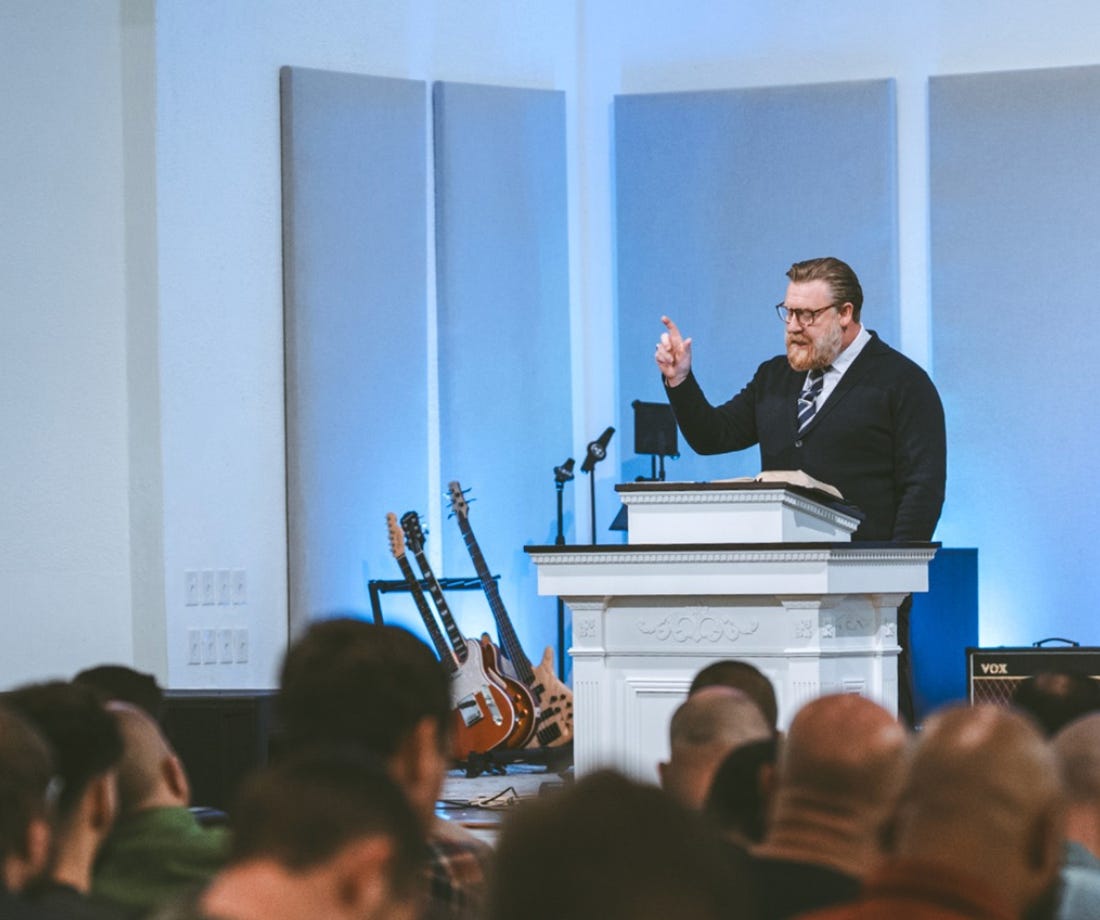
Key text: Mark 1:14–17, 2 Timothy 2:1–2
Memorable quote: “The purpose of being a disciple of Jesus is not a life on a cruise ship, it’s a life on a battleship.”
Steve gave me (and everyone else at the conference for that matter) a wake-up call. It centered on the urgent need for Christ-centered, unapologetic discipleship of men in the Church, especially right now, in a culture that’s completely confused about masculinity, identity, and purpose.
Men (especially young men) are lost. Culturally, they’re being bombarded with conflicting messages. Statistically, they’re falling behind in education, struggling to find meaningful work, checking out of family life, and wrestling with mental health at alarming rates. And where there’s no biblical vision of manhood, something else will fill the void. Right now, that’s everything from secular liberalism to Islam.
But the solution isn’t some flashy new strategy. It’s not more programs or clever branding. The answer is what Scripture has always said: disciple men. Really disciple them. The way Jesus did. The way Paul commanded.
This was a call to fathers, pastors, and leaders to get serious about raising up men of God. It ended with a challenge to count the cost, lean into the slow work of discipleship, and pursue a legacy that exists for the glory of Christ, not the praise of man.
Session 3: Joe Holland
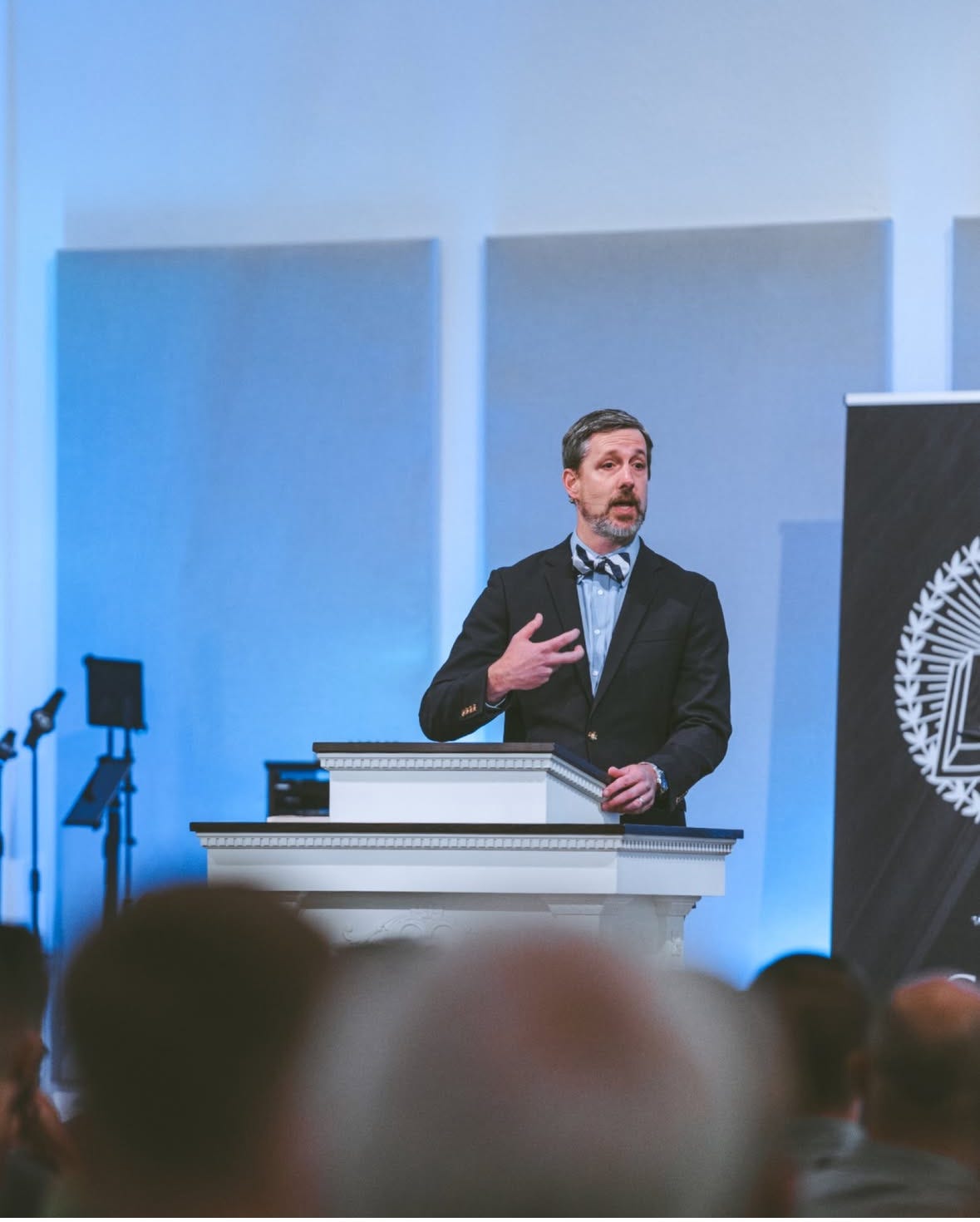
Key text: 1 Peter 1:2-5
Memorable quote: “It is not legalism to pursue virtue. It is antinomianism2 to avoid virtue and think all you need to do is sit around and think about the fact that you have been justified by faith.”
Joe Holland didn’t dance around the issue, he went straight at it: Christian men today lack virtue—and it’s showing. Holland traced the idea of virtue from ancient philosophy to modern confusion, then grounded in Scripture.
He opened with a powerful story from the Battle of Mogadishu, tapping into the God-given desire in men for courage and nobility. From there, it moved through how thinkers like Socrates wrestled with defining virtue but couldn’t actually produce it in people. Then came the modern shift, where men are told to invent their own values, and the result is a culture that’s lost all moral clarity.
But 2 Peter 1 makes it plain: virtue isn’t optional for believers. It’s a Spirit-empowered response to saving faith. We don’t chase it to earn anything, we pursue it because we belong to Christ.
The call was clear: be men of virtue.
Session 4: Doug Logan
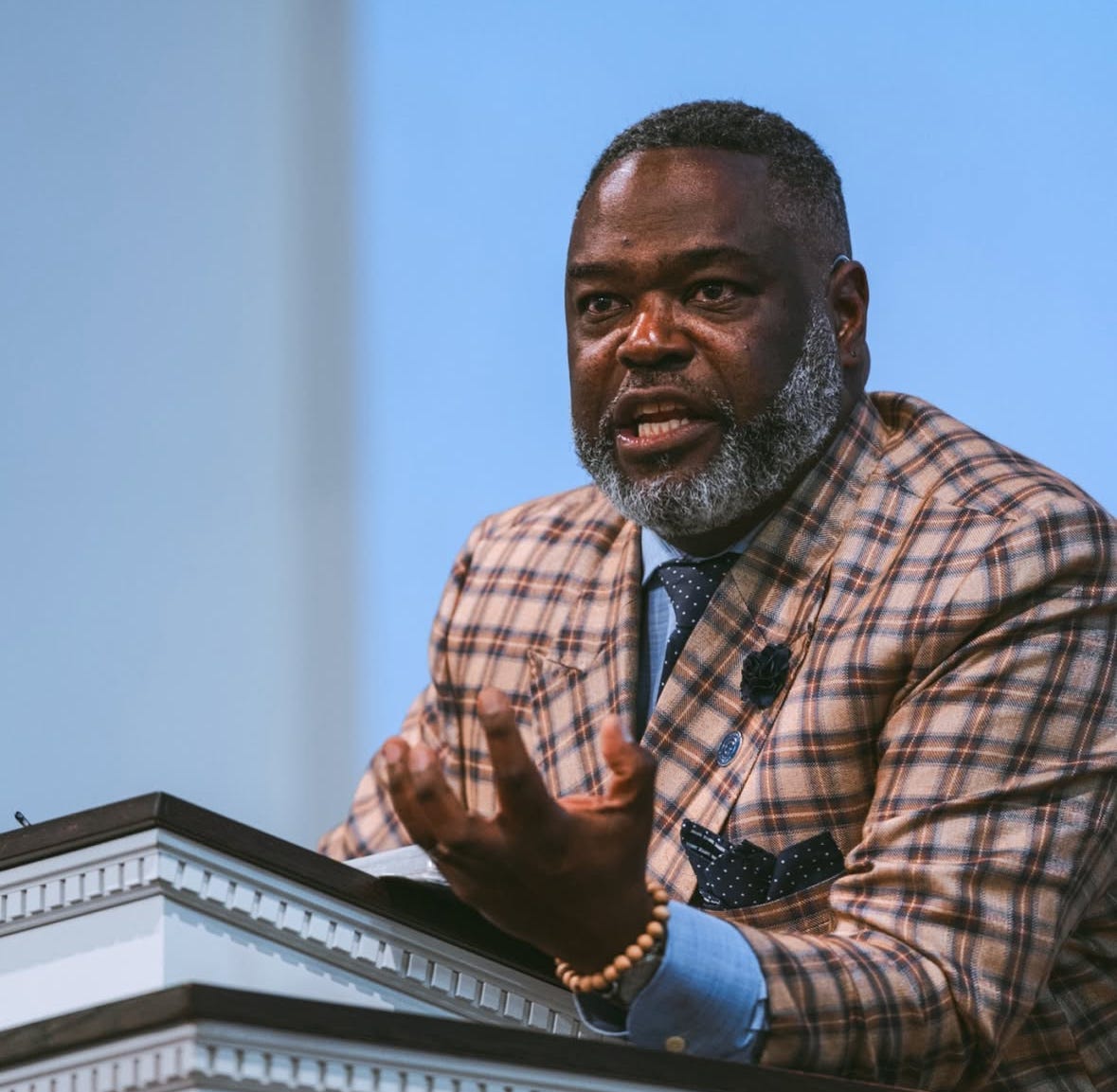
Key text: Proverbs 29:25
Memorable quote: “The fear of man isn’t just nervousness or stage fright. It’s misplaced worship.”
Doug Logan brought the heat in this sermon, calling out one of the biggest issues choking the spiritual life out of Christian men, the fear of man.
Pulling from Proverbs 29:25, he made it clear: the fear of man is a trap. It’s not just insecurity, it’s idolatry. It puts human approval on the throne where only God belongs. Doug walked through biblical examples like Saul, Pilate, and Peter to show how fear leads to compromise and paralysis.
But he didn’t leave it there. The antidote isn’t arrogance or isolation, it’s fear of the Lord. Real freedom comes when we trust in God fully, stand on His Word, and stop living for likes, applause, or acceptance.
Doug built from exposing the trap, to showing the way out: faith, trust, and identity rooted in Christ. Doug closed by reminding us that suffering for Christ isn’t punishment, it’s a privilege. Jesus walked into the ultimate snare on the cross so we could walk free.
Session 5: Andrew Newell
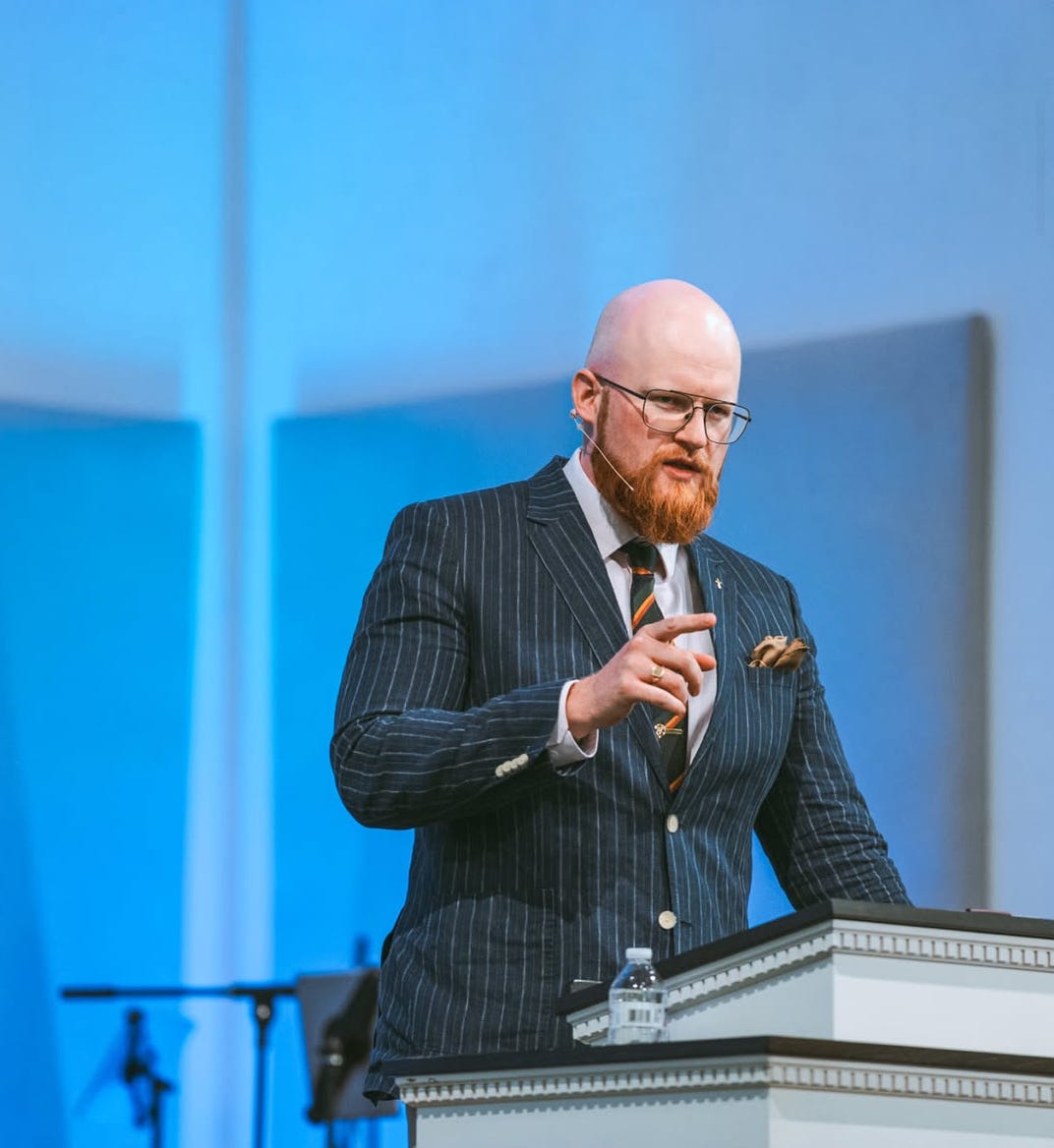
Key text: 1 John 5:19
Memorable quote: “To counter the lies that the world tells, we have to constantly repeat God’s story over our lives.”
Andrew came in with a sharp and needed word on the power of story. He went on to explain how the false stories of our culture are shaping Christians, often without us even realizing it.
He started with a counseling story about a young man caught in sexual sin. The heartbreaking part? His Christian parents’ advice was essentially, “If you must, just don’t go too far.” That set the tone. Even well-meaning believers are being discipled more by culture than by Scripture. Why? Because we’ve bought into its narratives.
Andrew showed us that cultural stories are nothing new. Genesis 3 was the first one: a false narrative that challenged God’s truth. And the enemy hasn’t stopped spinning lies since.
The answer isn’t just knowing the truth though, it’s remembering and retelling the right story. From Exodus 13, he outlined ways God commands His people to keep His story front and center. Remember it. Retell it. Embody it. That’s how we fight the lies.
He closed with this: every believer, no matter their stage of life, is called to be a faithful storyteller of God’s redemption. Our identity is rooted in Christ’s finished work and the coming new creation, not in the hollow promises of the world. The gospel story is better than whatever lie the world wants to throw at us.
Session 6: Mark Becton
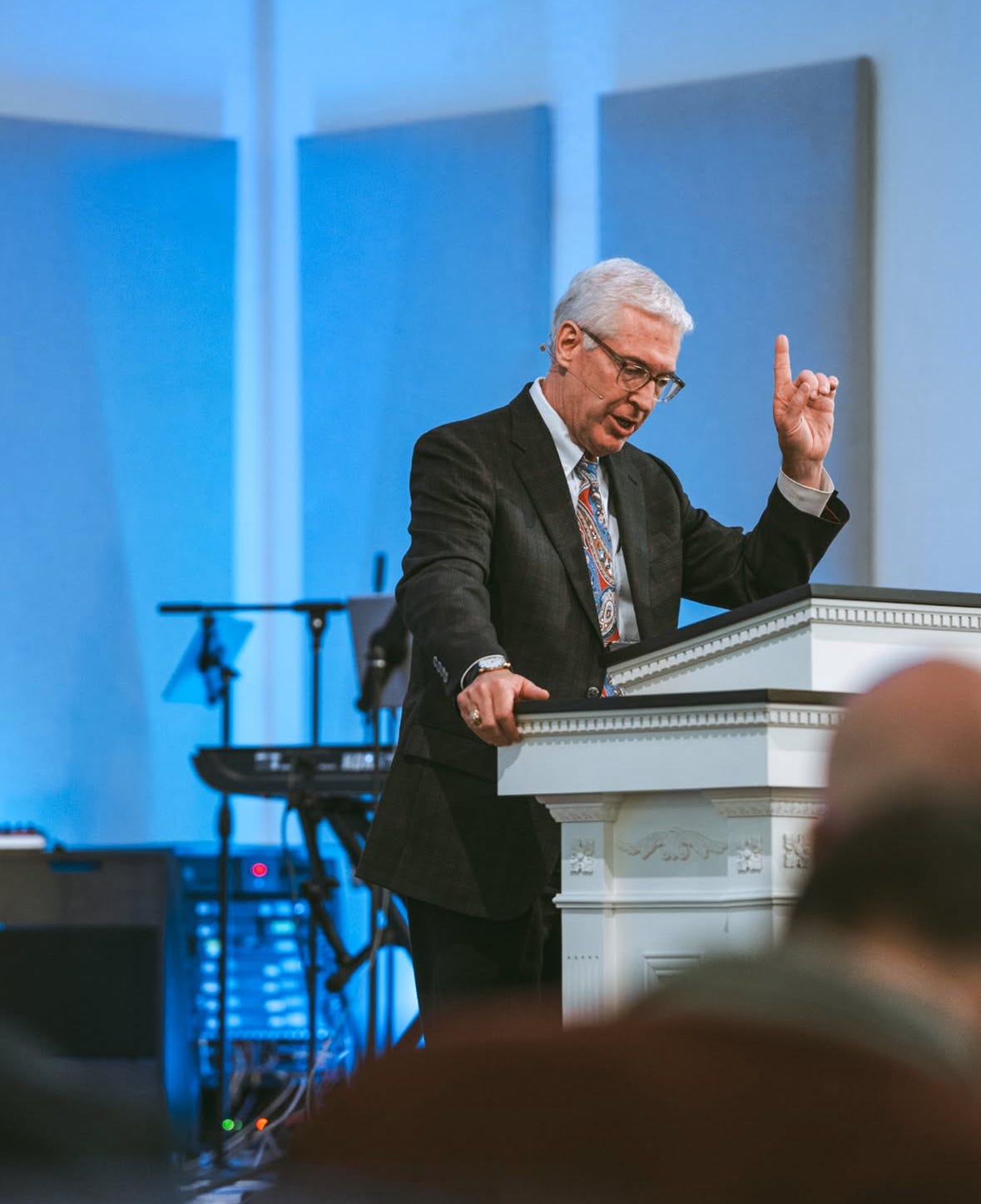
Key text: Jeremiah 33:1-3
Memorable quote: “Sometimes God purposes seasons of confusion and frustration and pain so that His consuming fire becomes our refining fire.”
One of my favorite Grimke professors, Mark Becton, preached a deeply personal and convicting word on prayer. But not the quick, surface-level moments we might be accustomed to, but long, honest, soul-baring conversations with God. The kind we were made for.
Drawing from Jeremiah’s life, he showed how easy it is to drift into prayerlessness. Our sin nature, our broken expectations, and even our religious busyness can all lead us to shallow prayer. We start with long talks with God and end up sending short texts.
He warned that we often come to prayer with the wrong “picture” where we are expecting God to move according to our timeline, or the wrong “aim” where we are seeking comfort over God’s glory. And so when God doesn’t meet those expectations, like in Jeremiah’s story, we pull away rather than press in.
The remedy to this? Ask God to expose our sin, to break our apathy, and to reignite passion for His presence. Becton made a simple plea to us: return to long conversations with the Lord. Not because it’s easy, but because He is worthy. And because that’s where real communion, strength, and joy are found.
Session 7: Doug Ponder
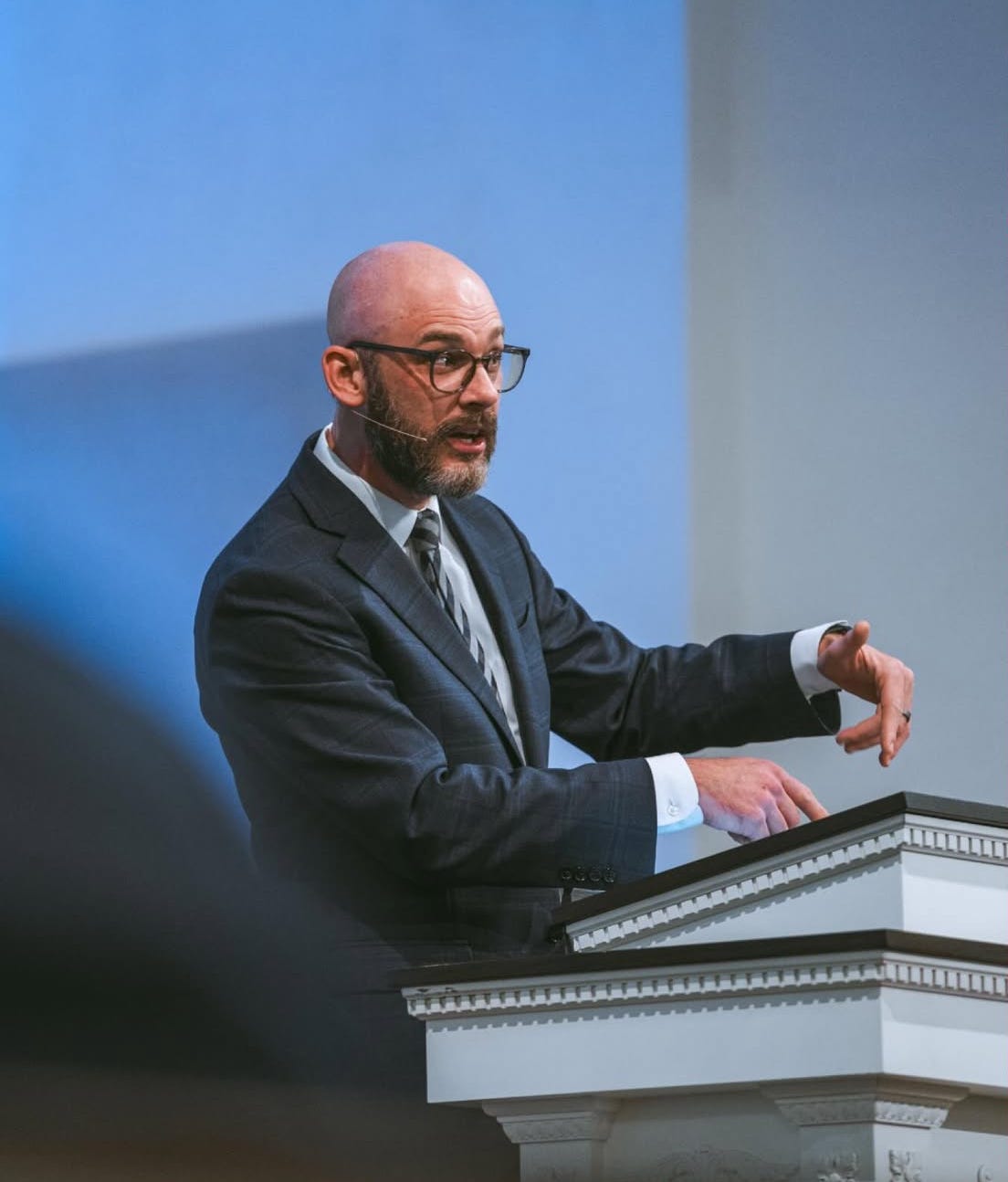
Key text: Genesis 1:27
Memorable quote: “The world is changing, but the Bible isn’t. So the choice before Christians is one of cowed submission to the feminist vision of interchangeable tutors. Or one of wholehearted allegiance to the God who made us male and female.”
As usual, Doug Ponder didn’t hold back. His sermon went straight to the heart of one of the most pressing theological and cultural battles of our time: the doctrine of man, biblical anthropology. What does it mean to be human? Male? Female?
Our culture is in chaos over those questions, and sadly, so is much of the Church.
Doug showed how things like gender confusion, radical feminism, and the redefinition of marriage are not isolated issues, they are symptoms of a deeper rebellion against God’s design. When we abandon what Scripture says about the sexes, we lose far more than social norms. We lose the foundation of human identity, family, and gospel clarity.
He took us back to Genesis 1 through 3 to show that God’s creation of man and woman was not arbitrary or interchangeable. Men and women were made equal in value, yet distinct in role and purpose. That distinction is not a cultural artifact. It is God’s intentional design. Ignoring it undermines both His authority and His goodness.
The Church, he said, needs three kinds of men right now. Men who know God’s design and can articulate it with clarity and conviction. Men who are unashamed of the truth and are willing to stand firm even when it is unpopular. And men who act. Men who live this out in their homes, in their churches, and in how they engage the world.
This message was not just about cultural issues. It was about courageous faithfulness. Doug ended by urging us to stop cowering and start standing. God’s design is not something to be embarrassed about. It is something to embrace and embody for the good of our families, the health of the Church, and the glory of Christ.
Our world is drowning in false stories about what it means to be human. The Church must be the place where the truth is not only spoken, but lived.
Session 8: H.B. Charles
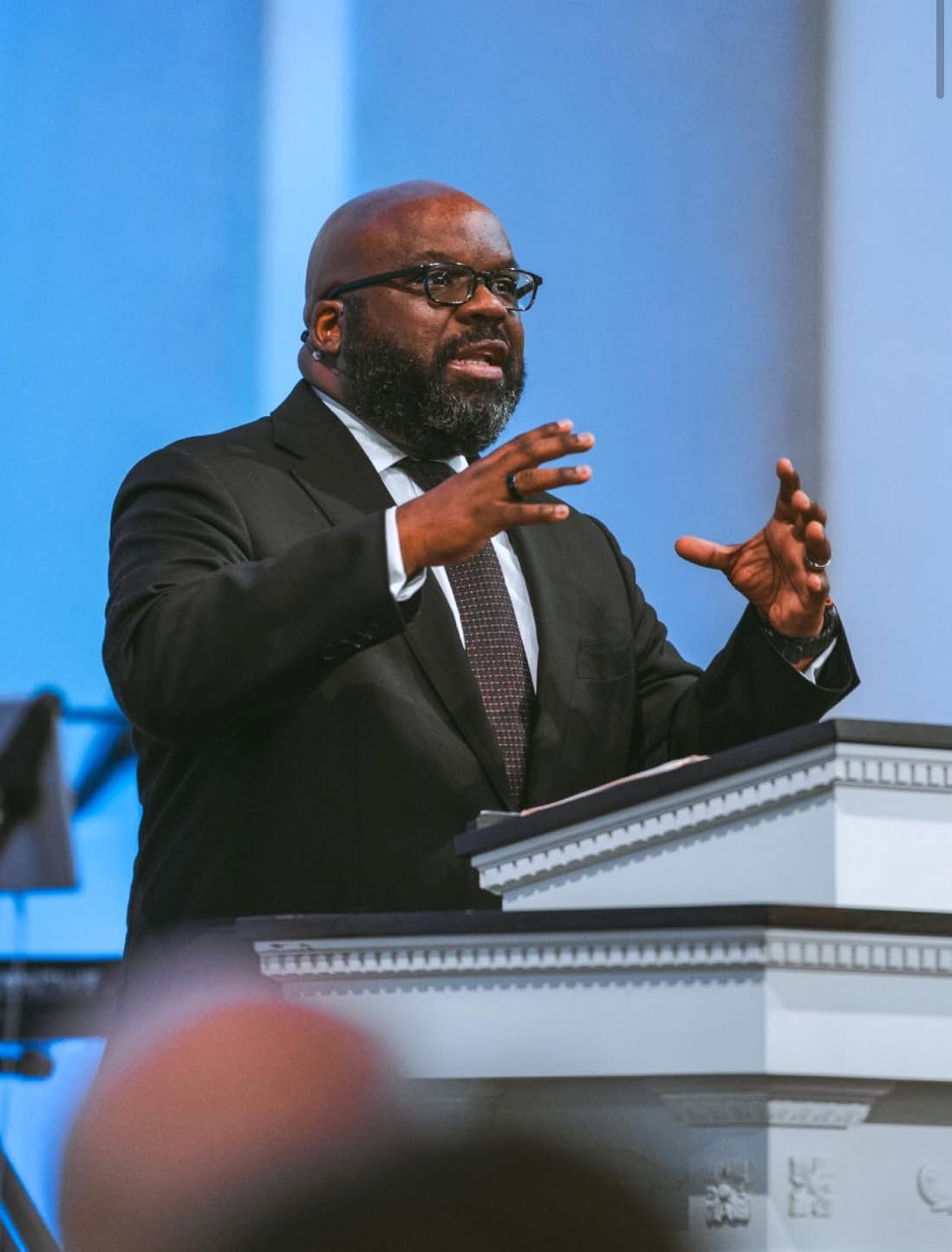
Key text: Mark 15:21
Memorable quote: “Christianity moves forward when men get off the sidelines, carry the cross, and follow Jesus.”
H.B. Charles preached a powerful message on one of the most overlooked figures in the Passion narrative: Simon of Cyrene. Just one verse in Mark 15:21, but it speaks volumes.
Simon was an ordinary man, likely just arriving in Jerusalem, when he was suddenly forced to carry Jesus’ cross. H.B. used this moment to unpack lessons about providence, discipleship, and the meaning of the cross. The big idea was clear: God often calls ordinary people, in unexpected moments and unwanted circumstances, to be part of His redemptive work.
There are no coincidences in God’s plan. Simon did not plan to carry the cross, but God had already appointed that moment. His background did not disqualify him, and his interruption became his greatest contribution. That truth hits deep. Sometimes what feels like a disruption is actually a divine invitation.
H.B. walked through Simon’s story, showing that discipleship is not about comfort, it is about cross-bearing. Following Jesus will cost us something, but it will also transform us. Simon started as a bystander and ended up forever connected to the cross of Christ.
Session 9: Mez McConnell
Key text: Matthew 12:15-21
Memorable quote: "The true response to the social justice movement is not to retreat into doctrinal isolation, but to actively demonstrate that compassion and justice are core to our faith. By living out the gospel through both word and deed, we show that caring for the poor and oppressed transcends ideological boundaries and is central to authentic theology."
Mez McConnell brought a hard-hitting and much-needed word on the tension that exists in the Reformed world between gospel proclamation and social justice and he made one thing clear from the start: these are not competing priorities. In the ministry of Jesus, word and deed go hand in hand.
Preaching from Matthew 12:15-21, with a focus on verse 18 and its connection to Isaiah 42, Mez showed that Jesus came as the Spirit-anointed servant to bring justice, not just to Israel, but to the nations. This was no political justice project and no shallow mercy ministry. This was the justice of God on display through the life, death, and resurrection of His Son. And that gospel has both eternal and practical implications.
Mez called out two camps. First, the “gospel-only” crowd that refuses to engage the needs of the poor and marginalized. All heads, no heart. Then the “social justice” crowd that has good intentions but often loses its grip on gospel clarity. Neither extreme reflects the fullness of Christ’s mission.
The answer is not balance. It is faithfulness. Proclaim the gospel boldly. And while you do, get in the trenches. Love the poor. Serve the broken. Pursue justice because Christ is just. Mez rooted this call in Scripture, in church history, and in real stories from his own ministry among the least reached and the most overlooked.
This message was a challenge to reject false dichotomies and step into holistic ministry. The gospel is the only true hope for both personal and societal transformation. One day, all injustice will be wiped away. Until then, the Church must be the loudest voice for truth and the clearest picture of mercy.
It is not either-or. It is all in for Christ, all in for His kingdom, and all in for those He came to save.
Final Thoughts
Every single message pointed to the same truth: Christianity tomorrow depends on the faithfulness of Christian men today. Not perfect men. Not platformed men. But faithful, ordinary, gospel-loving, Spirit-filled men who fear God, not man, and who are ready to carry the cross, whatever the cost.
Let’s not just talk about it. Let’s live it. For His glory.
Dogma is defined as “a belief or set of beliefs that is accepted by the members of a group without being questioned or doubted.” In Christianity, dogma is the body of biblical doctrines proclaimed by and accepted by Christians. The dogma of the Christian religion is that which is preached from the pulpit, taught by Christian leaders, and believed by followers of Christ. To be orthodox, Christian dogma must align with the teaching of the Word of God.
The word antinomianism comes from two Greek words, anti, meaning "against"; and nomos, meaning "law." Antinomianism means “against the law.” Theologically, antinomianism is the belief that there are no moral laws God expects Christians to obey. Antinomianism takes a biblical teaching to an unbiblical conclusion. The biblical teaching is that Christians are not required to observe the Old Testament Law as a means of salvation. When Jesus Christ died on the cross, He fulfilled the Old Testament Law (Romans 10:4; Galatians 3:23-25; Ephesians 2:15). The unbiblical conclusion is that there is no moral law God expects Christians to obey.
Thanks for the recap! Great work capturing the gravity and urgency for us as Christian men and pastors to step up in this next chapter. Sad to have missed it! I can't wait to see the brothers in the fall. You should come back for another degree, doc 😉
Excellent work Pedro! I think Grimké knows where the important battles are in the American church. They have modeled the importance of "understanding the times" and knowing what the church should do (1 Chr. 12:32). Bummed that I missed the conference this year